
STP / ETP Equipment · Decanting Pump
Decanting Pump
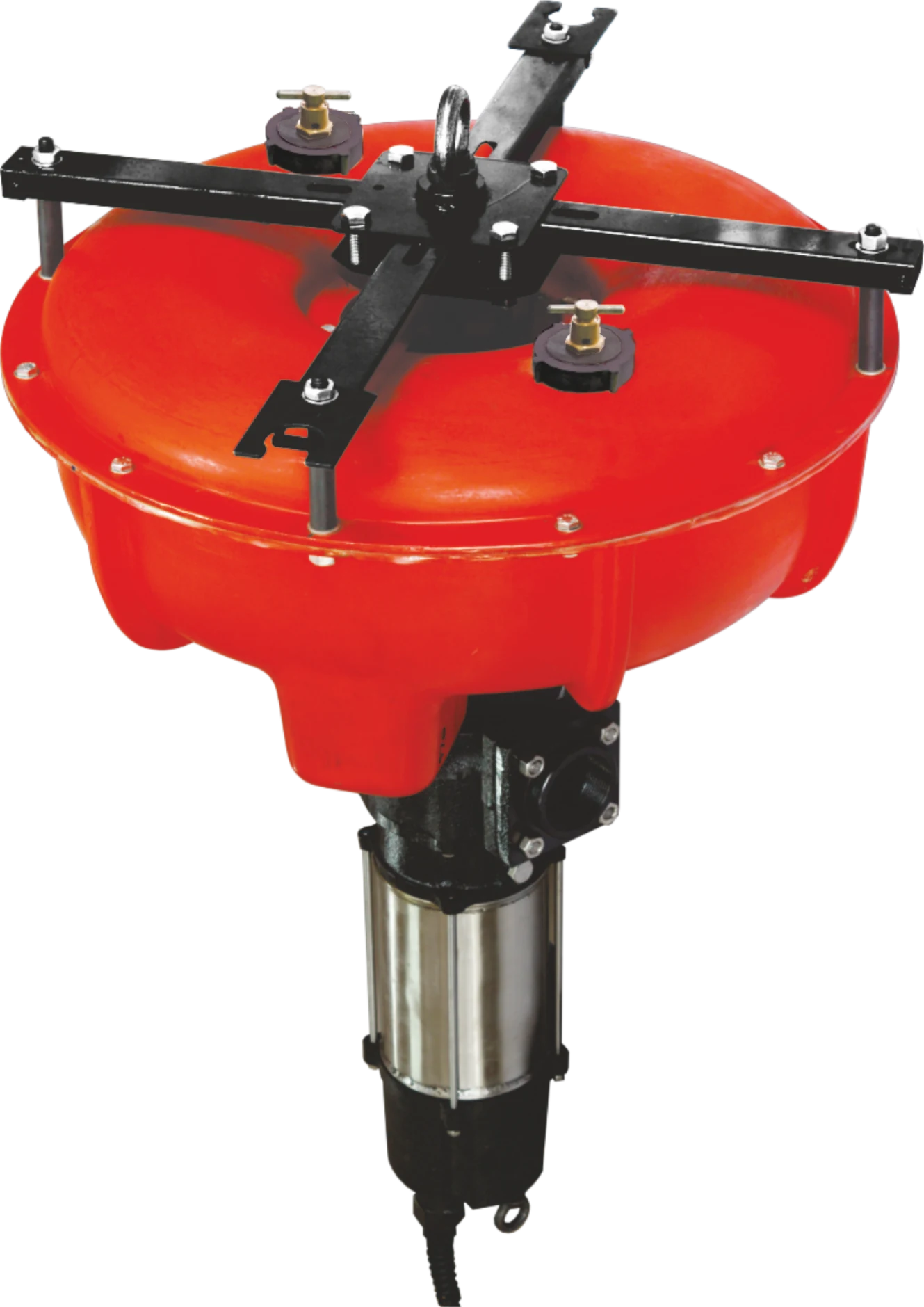
Floating Supernatant Decanter
Removes only the clear supernatant water from a settled tank, without drawing in solids. The pump floats, following the level down as the tank empties, and stops by itself when a sensor detects the water at its inlet turning cloudy — protecting effluent quality without operator intervention.
- Motor power
- 0.5 – 2 HP (0.35 – 1.5 kW)
- Pipe size
- 25 – 65 mm
- Max head
- 10 – 15 m
- Max discharge
- 6,000 – 30,000 lph
What it’s for
Clear Water Off the Top, Sludge Left Behind
Decantation separates a mixture by removing a layer of liquid — generally the layer above a settled precipitate. In a treatment tank that means drawing off the clear supernatant between the sludge on the floor and any floating debris on the surface, without disturbing either.
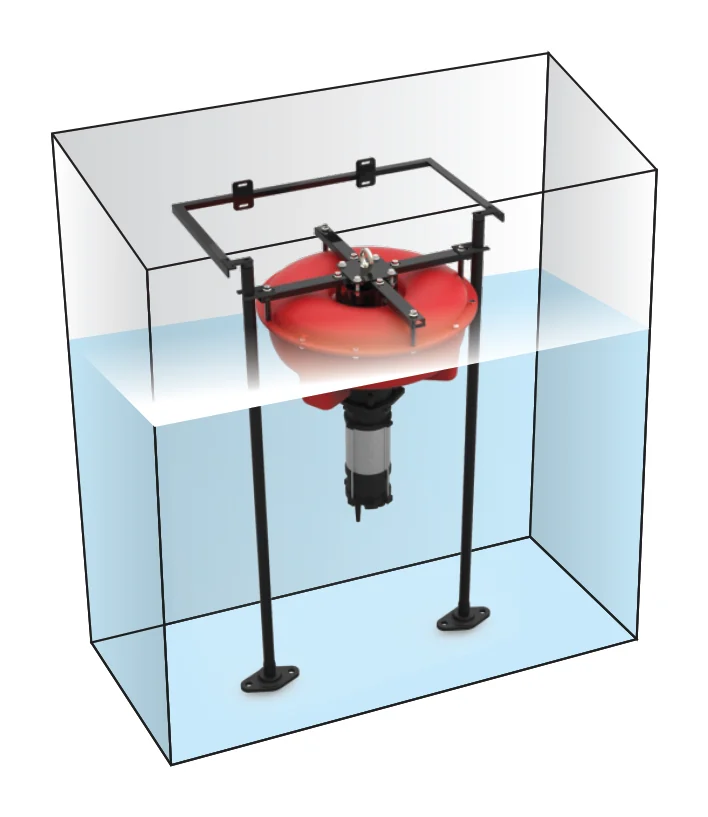
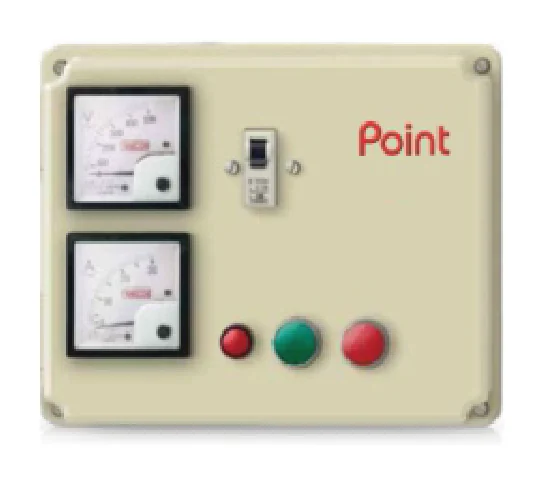
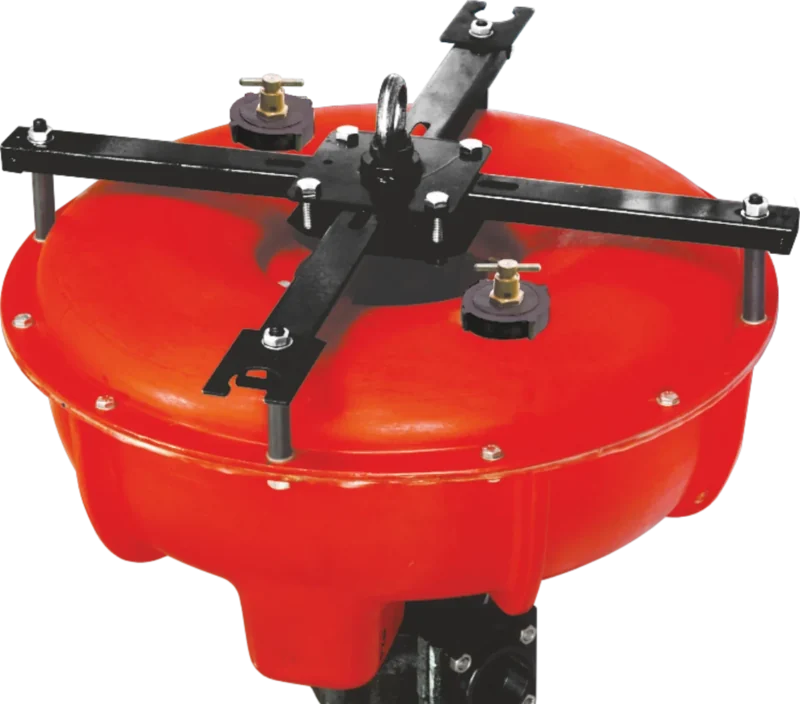
Point’s decanting pump hangs beneath a fibre-reinforced plastic float, so it adjusts automatically as the liquid level changes and always draws from the clear layer. Once switched on, it keeps emptying the tank until its sensor detects cloudy water near the pump inlet, then stops — so sludge isn’t carried over. An optional light-sensor controller and float-switch control panel make the operation fully automated and failure-proof.
It is built for continuous operation with little maintenance, and recovers as much treated water as possible while holding effluent quality — in municipal and industrial plants alike.
Construction
How It’s Built
Specifications
Technical Data
- 25-DCP-06
- 0.35 kW / 0.5 HP · 25 mm pipe · 1 ph · 10 m max head · 6,000 lph max discharge
- 40-DCP-10
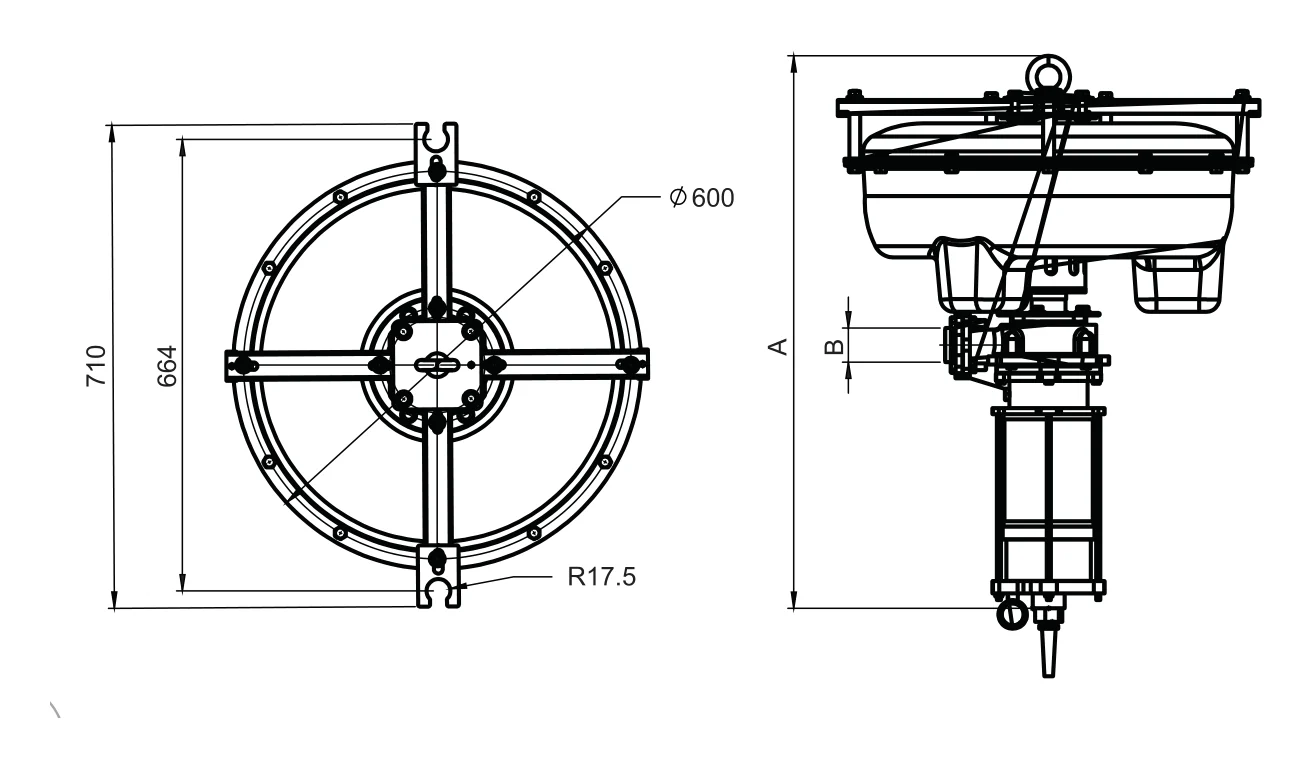
- 0.35 kW / 0.6 HP · 40 mm pipe · 1 or 3 ph · 10 m max head · 10,000 lph max discharge · 985 mm overall height
- 50-DCP-20
- 1.1 kW / 1.5 HP · 50 mm pipe · 1 or 3 ph · 12 m max head · 20,000 lph max discharge · 1150 mm overall height
- 65-DCP-30
- 1.5 kW / 2.0 HP · 65 mm pipe · 1 or 3 ph · 15 m max head · 30,000 lph max discharge · 1150 mm overall height
- Pump casing
- GG20
- Impeller
- GG20 / SS420
- Motor body
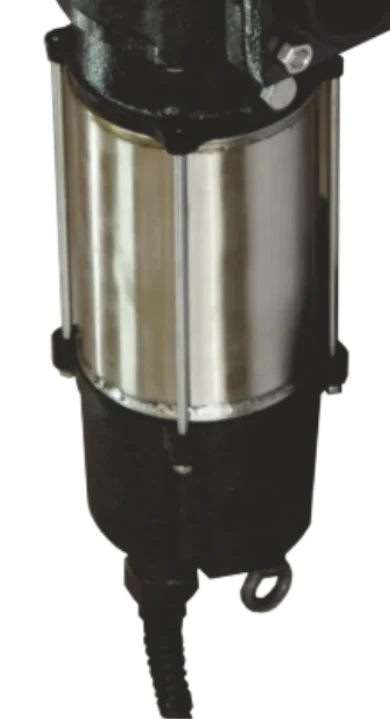
- SS 304
- Motor shaft
- SS 420 / SS 431, induction hardened
- Cable
- Rubber cable, H07RNF
- Bearing
- Shielded ball bearing, or journal bearing for a water-filled motor
- Discharge connection
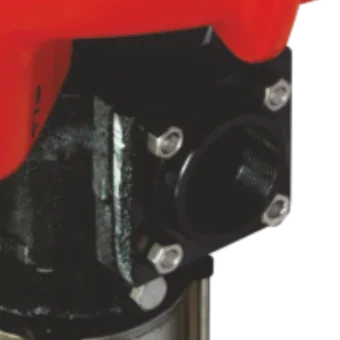
- Flange and hose coupling
- Suction
- Spring-loaded non-return valve
- Float
- Fibre-reinforced plastic, filled with PUF
Performance table — four models
Construction
- Motor
- 2-pole — 230 V single-phase or 420 V three-phase
- Float diameter
- Ø 600 mm
- Frame span
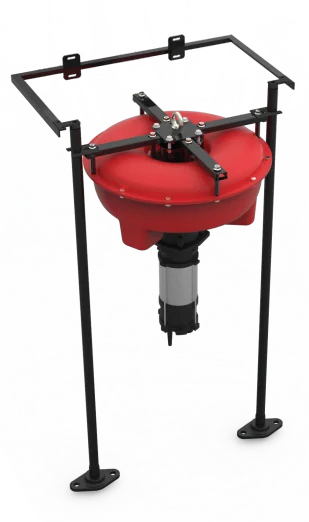
- 710 mm
- Installation
- Rides inside a steel guide frame standing on the tank floor
- Automation
- Turbidity sensor stop; optional light sensor
- Light sensor (optional)
- Reads the change in surrounding and reflected light and switches the pump on or off
- Control panel
- Starts the pump through a float switch, for high and low water levels
- Protection, single phase
- High and low current control
- Protection, three phase
- Single-phasing preventer with high-load controller
- Optional
- Voltage and current indicators, emergency stop
- Worked example
- 40-DCP-10
- 40
- Pipe size, in mm
- DCP
- Decanting pump
- 10
- Capacity, in m³/h
Motor & float
Controls
How to read the model code
Applications
Where It’s Specified
Sewage and effluent treatment plants, drawing clear water off primary and secondary settling tanks.
Equalization and sedimentation tanks, and sludge thickening tanks, where supernatant has to come off without disturbing what has settled.
Water reuse and recycling systems, where only clear water should move on to the next stage.
Food and beverage processing, chemical and pharmaceutical, textile, and paper and pulp industries.
Common questions
Frequently Asked Questions
Can it run unattended?
Yes — its turbidity-based sensor stops the pump automatically if sludge begins to be drawn in, and the optional light-sensor controller and float-switch control panel support fully automated operation.
How does it keep solids out?
The pump rides on a float, so its inlet stays in the clear layer between the settled sludge and the surface as the level drops. When the water near the inlet turns cloudy, the sensor stops the pump before sludge is carried over.
Where does it sit in the treatment line?
Near the end. A typical line runs from screening (Rotary Rake Bar Screen) through surface clean-up, mixing and aeration, to clear water recovery with the decanting pump, and finally solids handling with the Solid-Liquid Separator.