
Food Waste Disposer · Commercial
Standalone Crusher
Standalone Series — SB & SC
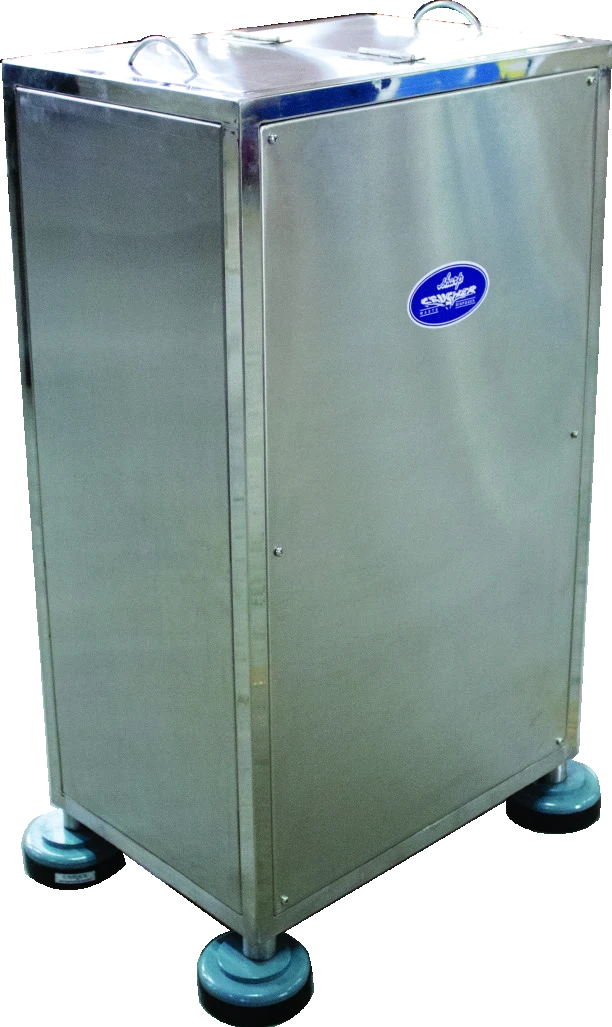
An independent, floor-standing food waste crusher cabinet that connects to existing flushing water, drainage and electrical supplies — an independent installation that becomes part of any commercial or industrial kitchen without changing its layout. Seven capacity models, 300 to 1500 kg/hr, in batch (SB) or continuous-feed (SC) configurations.
- Capacity
- 300 – 1500 kg/hr
- Motor power
- 1 – 10 HP
- Series
- Standalone
- Models
- Seven — CD1100 to CD10200A
What it’s for
An Independent Cabinet, Ready to Plumb In
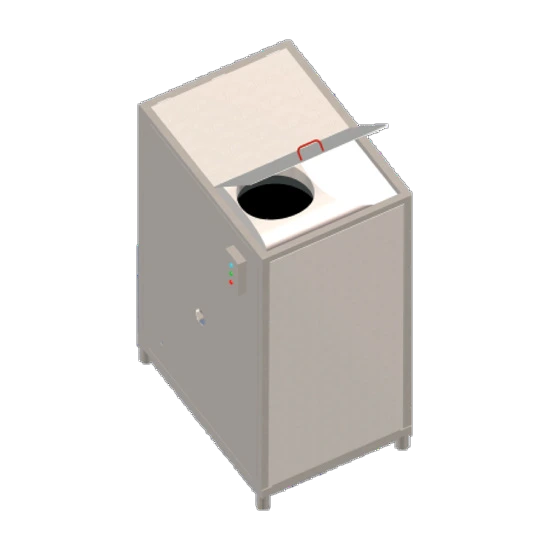
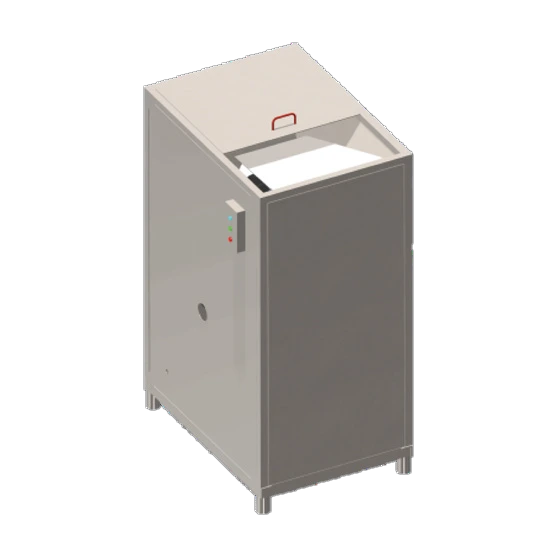
Where the Tabletop series mounts on the sink or in a table or working area, the Standalone cabinet is a self-contained, floor-standing unit — delivered ready to connect to existing flushing water, drainage and electrical supplies, so it becomes part of a commercial or industrial kitchen without any change to its layout. SB (batch) crushes in batches: when the crusher starts, a valve opens and water flushes the food waste into the grinding chamber and out to the wastewater system, and a limit switch stops the crusher the moment the cover is lifted. SC (continuous) uses an angled safety cover instead, permitting ongoing feeding while the crusher runs, with the same limit-switched protection.
Both run the same grinding chamber, teeth ring and cutter-blade mechanism as the Tabletop series, across seven capacity models with three inlet sizes and five mounting variants — 300 to 1500 kg/hr, the same range as its sink-mounted sibling, the Food Waste Crusher.
Construction
Which Series Fits?
Two feed styles, one cabinet — batch or continuous, both plumbed in rather than sink-mounted.
Specifications
Technical Data
- CD1100-SB/SC
- 300 kg/hr · 1 HP (0.75 kW) · 2.3 A · 1440 rpm · 50 mm outlet · 125 mm inlet · 70 kg net, 100 kg gross
- CD2200-SB/SC
- 500 kg/hr · 2 HP (1.5 kW) · 4.1 A · 1440 rpm · 50 mm outlet · 125 mm inlet · 80 kg net, 110 kg gross
- CD3200-SB/SC
- 700 kg/hr · 3 HP (2.2 kW) · 5.2 A · 1440 rpm · 50 mm outlet · 125 mm inlet · 90 kg net, 120 kg gross
- CD3200A-SB/SC
- 700 kg/hr · 3 HP (2.2 kW) · 5.2 A · 1440 rpm · 50 mm outlet · 250 mm inlet · 130 kg net, 170 kg gross
- CD5200A-SB/SC
- 850 kg/hr · 5.0 HP (3.7 kW) · 10 A · 1440 rpm · 50 mm outlet · 250 mm inlet · 160 kg net, 200 kg gross
- CD7200A-SB/SC
- 1000 kg/hr · 7.5 HP (5.5 kW) · 15 A · 960 rpm · 80 mm outlet · 300 mm inlet · 350 kg net, 400 kg gross
- CD10200A-SB/SC
- 1500 kg/hr · 10.0 HP (7.5 kW) · 20 A · 960 rpm · 100 mm outlet · 300 mm inlet · 400 kg net, 450 kg gross
- Grinding chamber
- FG 200 / GG 200
- Hopper
- FG 200 / GG 200
- Teeth ring
- AISI SS 440C
- Impeller
- AISI SS 440C
- Cutter blades
- Hardened chrome steel
- Shaft
- AISI SS 431
- Mechanical seal
- Carbon / ceramic
SB / SC Series — Technical Parameters
Construction
- Softer waste
- All seven models · plate leftovers, meat and fish scraps, chicken bones, pasta · cold buffet, bar, washing line
- Medium waste
- CD3200 and up · medium bones, crab shells · preparation kitchen, clean-up station
- Tough waste
- CD3200A and up · any type of bone · pot wash, rough clean-up station
- Central station
- CD5200A and up · large amounts, or long periods of continuous running
- Model suffix "A"
- The larger inlet sizes — 250 or 300 mm against 125 mm. CD3200 and CD3200A are both 700 kg/hr at 3 HP; the A model takes the 250 mm inlet in a larger cabinet.
- Mounting
- Five mounting variants across three inlet sizes, for any size of installation.
- CD1100
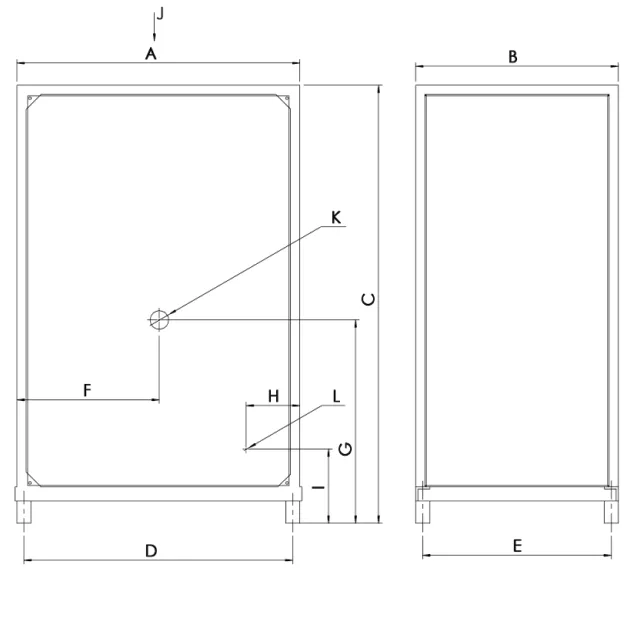
- A 550 · B 380 · C 925 · D 510 · E 342 · F 275 · G 455 · H 150 · I 200 · J 125 · K 50 · L 12.5
- CD2200
- A 550 · B 380 · C 925 · D 510 · E 342 · F 275 · G 440 · H 150 · I 200 · J 125 · K 50 · L 12.5
- CD3200
- A 550 · B 380 · C 1190 · D 727 · E 510 · F 385 · G 580 · H 150 · I 200 · J 125 · K 50 · L 12.5
- CD3200A
- A 765 · B 550 · C 1190 · D 727 · E 510 · F 385 · G 580 · H 150 · I 200 · J 250 · K 50 · L 12.5
- CD5200A
- A 765 · B 550 · C 1190 · D 727 · E 510 · F 385 · G 610 · H 150 · I 200 · J 250 · K 50 · L 12.5
- CD7200A
- A 720 · B 720 · C 1370 · D 780 · E – · F 360 · G 650 · H 150 · I 200 · J 300 · K 80 · L 12.5
- CD10200A
- A 720 · B 720 · C 1370 · D 780 · E – · F 360 · G 650 · H 150 · I 200 · J 300 · K 100 · L 12.5
Model selection — by the toughest waste
Sizing note
Dimensions (mm) — letters as on the drawing
Applications
Where It’s Specified
Standalone cabinets sized for higher-volume kitchens — hostels, hospitals and staff canteens — as a unit of their own.
Connects to existing flushing water, drainage and electrical supplies, so a commercial or industrial kitchen adds one without redesigning it.
Feeds a larger biogas system as part of a centralized pre-processing line, upstream of macerators and chopper grinder pumps.
The Food Waste Crusher (Tabletop series) runs the same mechanism on the sink, or in a table or working area with its own cone and cover.
Common questions
Frequently Asked Questions
What's the difference between batch (SB) and continuous (SC)?
SB crushes in batches — starting it opens a valve, and water flushes the food waste through the grinding chamber to the drain; a limit switch stops the crusher the moment the cover is lifted. SC uses an angled safety cover instead, permitting ongoing feeding while the crusher runs, with the same limit-switched protection.
How is this different from the Tabletop series?
The Tabletop Food Waste Crusher mounts on the sink, or in a table or working area with its own cone and cover. The Standalone cabinet is independent and floor-standing, delivered ready to connect to existing flushing water, drainage and power.
What does the "A" suffix mean on a model code?
The A models take the larger inlet sizes — 250 or 300 mm against 125 mm — in a larger cabinet. CD3200 and CD3200A are both 700 kg/hr at 3 HP; CD3200A takes the 250 mm inlet.
What capacity do we need?
Pick by the toughest waste it will see. Softer waste — plate leftovers, meat and fish scraps, chicken bones, pasta — suits every model. Medium bones and crab shells need a CD3200 or larger; any type of bone, a CD3200A or larger; and a central station handling large amounts, or running for long periods, a CD5200A or larger.
Choose the larger model if it will run continuously for 1–2 hours at a time, or when it’s borderline between two — a bigger motor and grinding unit also pumps the ground waste through the water trap and into the drain more strongly. And several smaller units placed close to each work station beat one large unit they share, because less food waste is carried across the kitchen.