
Food Waste Disposer · Commercial
Food Waste Crusher
Tabletop Series
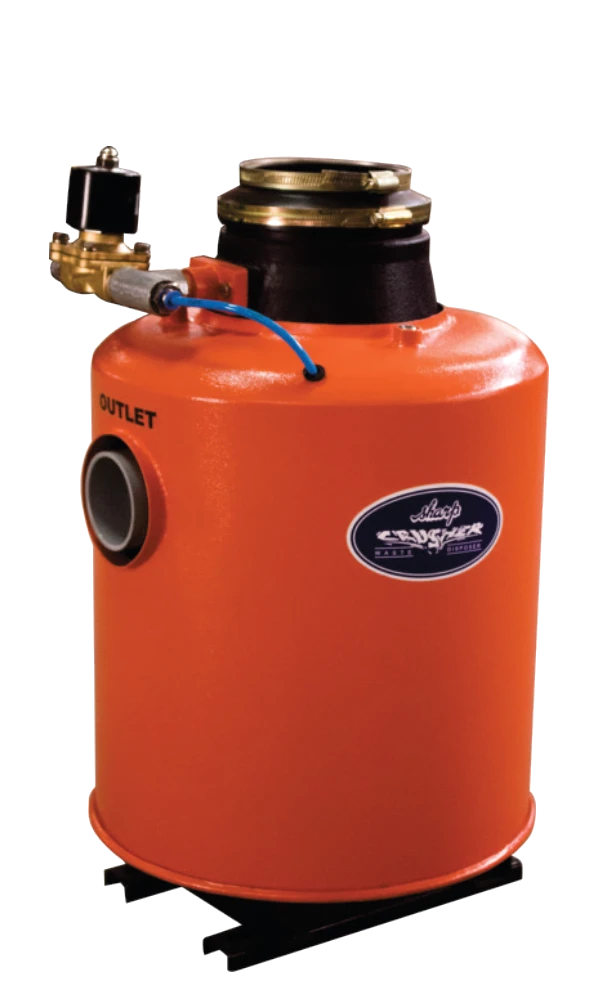
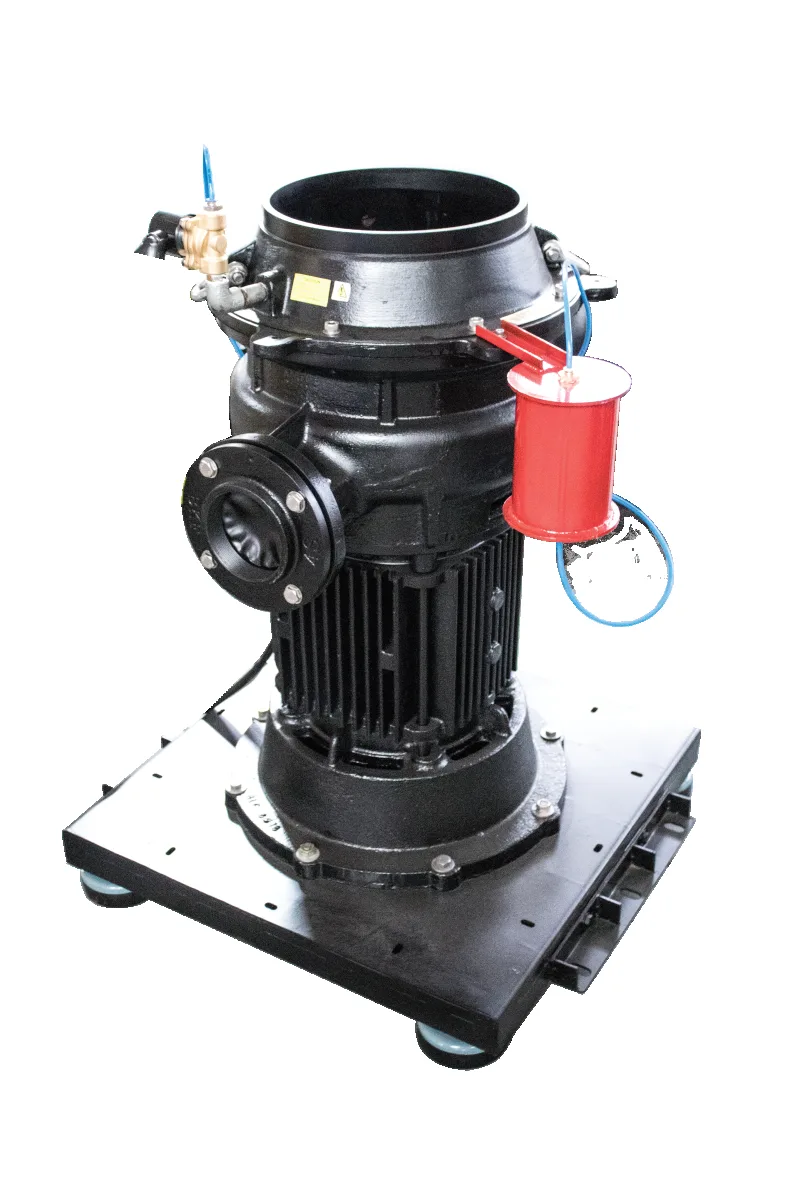
Reduces food waste to a homogeneous, flushable mixture at the point it's generated — on the kitchen sink, or straight into the table or working area, without changing the kitchen’s layout. Seven capacity models, 300 to 1500 kg/hr, across direct-fit, batch-cone and continuous-feed mounting.
- Capacity
- 300 – 1500 kg/hr
- Motor power
- 1 – 10 HP
- Series
- Tabletop
- Mounting variants
- 3 (TM · TB · TC)
What it’s for
Three Mountings, One Mechanism
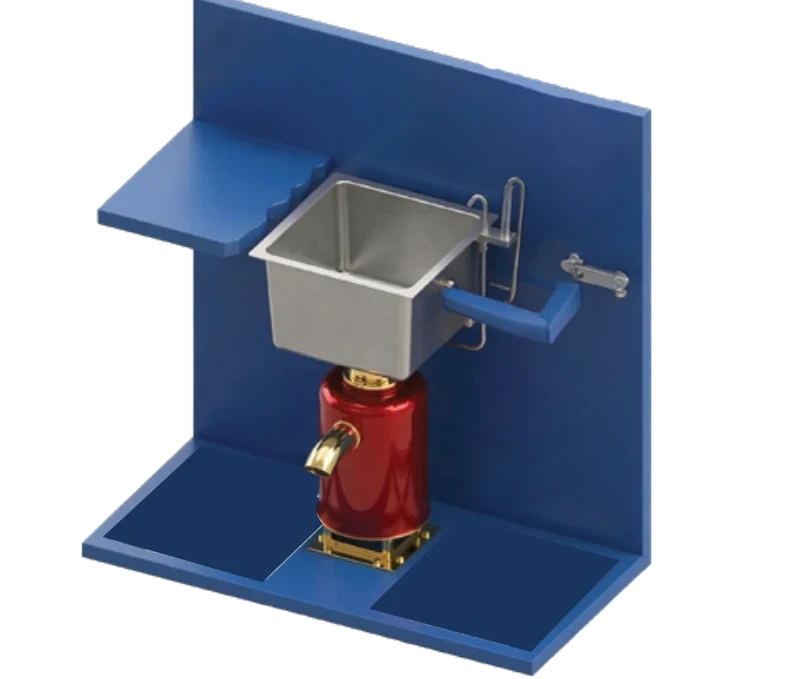
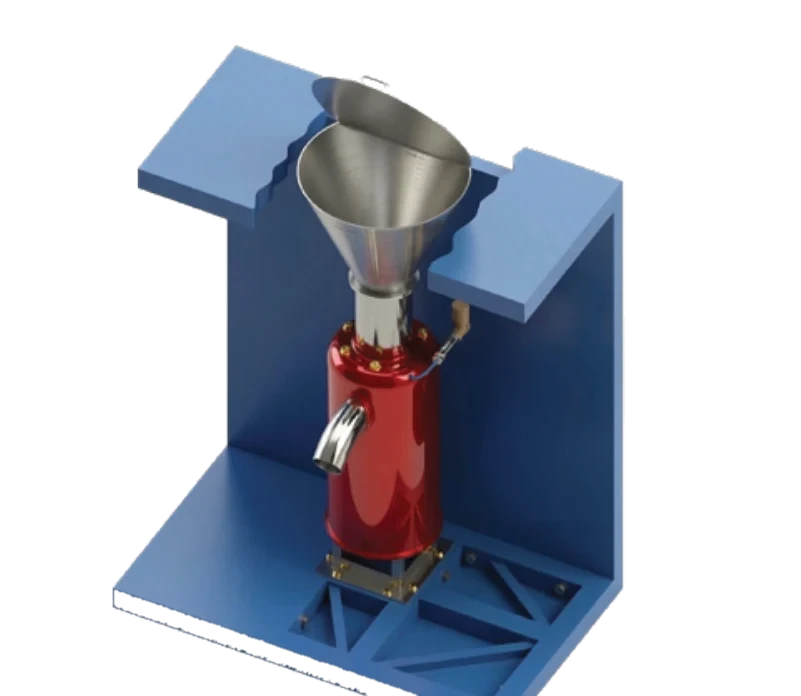
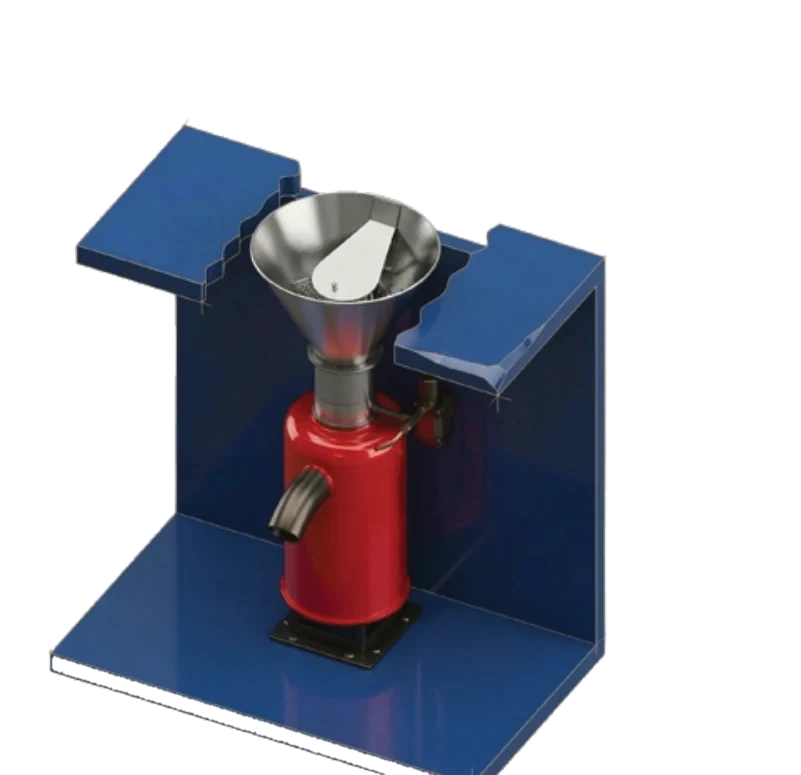
Tabletop crushers fit into the kitchen and working area as they are, without changing the existing layout. TM (direct mounting) goes on the sink: the sink is fitted with a 3″ or 4″ BSP nipple, and a plate supplied with the crusher fixes it there (the sink itself isn’t part of the standard accessories). TB (batch) and TC (continuous) come with a cone and cover and install directly in the table or working area. TB collects waste in the cone and crushes it in batches: when the crusher starts, two or three flushing nipples in the cone wash everything into the grinding chamber, the cover keeps hands away from the grinder while it runs, and a limit switch stops the crusher when the lid is opened. TC permits continuous feeding through a partially covered, limit-switched opening.
All three run the same grinding chamber and cutter-blade mechanism, built for energy efficiency and long-lasting durability, in seven capacity models from 300 to 1500 kg/hr with three inlet sizes — 125, 250 and 300 mm. The same range covers a single café kitchen and a large institutional canteen. A unit that stands on its own, plumbed into existing flushing water, drainage and power, is the Standalone Crusher.
Construction
Which Series Fits?
Three configurations, one mechanism — direct-fit on the sink, or a batch or continuous-feed cone in the table or working area.
Specifications
Technical Data
- CD 1050
- 300 kg/hr · 1 HP (0.75 kW) · 2.3 A · 1440 rpm · 50 mm outlet · 125 mm inlet · 48 kg net, 65 kg gross
- CD 2050
- 500 kg/hr · 2 HP (1.5 kW) · 4.1 A · 1440 rpm · 50 mm outlet · 125 mm inlet · 50 kg net, 70 kg gross
- CD 3050
- 700 kg/hr · 3 HP (2.2 kW) · 5.2 A · 1440 rpm · 50 mm outlet · 125 mm inlet · 60 kg net, 90 kg gross
- CD 3050A
- 850 kg/hr · 3 HP (2.2 kW) · 6.2 A · 1440 rpm · 50 mm outlet · 250 mm inlet · 120 kg net, 150 kg gross
- CD 5050A
- 850 kg/hr · 5 HP (3.7 kW) · 10 A · 1440 rpm · 50 mm outlet · 250 mm inlet · 130 kg net, 160 kg gross
- CD 7050A
- 1000 kg/hr · 7.5 HP (5.5 kW) · 15 A · 960 rpm · 100 mm outlet · 300 mm inlet · 300 kg net, 350 kg gross
- CD 10050A
- 1500 kg/hr · 10 HP (7.5 kW) · 20 A · 960 rpm · 100 mm outlet · 300 mm inlet · 350 kg net, 400 kg gross
- Grinding chamber
- FG 200 / GG 200
- Hopper
- FG 200 / GG 200
- Teeth ring
- AISI SS 440C / SS 420
- Impeller
- AISI SS 440C / SS 420
- Cutter blades
- Hardened chrome steel
- Shaft
- AISI SS 431, induction hardened
- Mechanical seal
- Carbon / ceramic
Tabletop Series — seven models (TM, TB or TC)
Construction
- Softer waste
- All seven models · plate leftovers, meat and fish scraps, chicken bones, pasta · cold buffet, bar, washing line
- Medium waste
- CD 3050 and up · medium bones, crab shells · preparation kitchen, clean-up station
- Tough waste
- CD 3050A and up · any type of bone · pot wash, rough clean-up station
- Central station
- CD 5050A and up · large amounts, or long periods of continuous running
- CD 1050
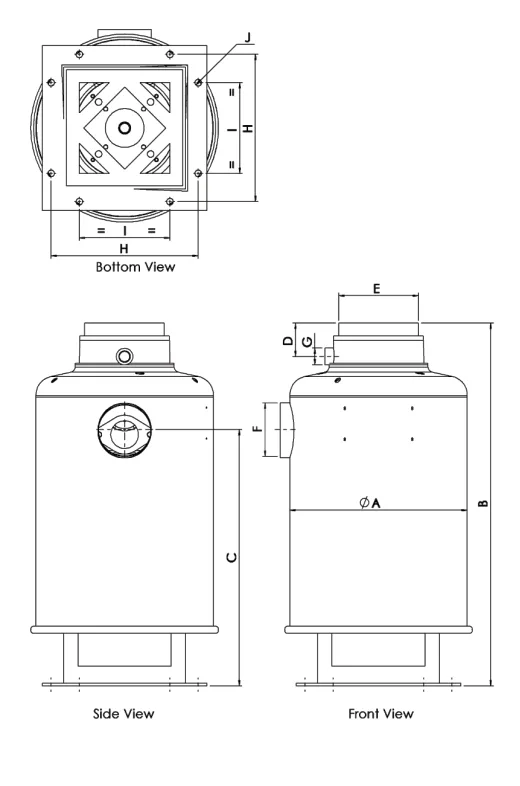
- ØA 340 · B 610 · C 375 · D 60 · E 125 · F 50 · G 9 · H 160 · I 160 · J M10 × 8
- CD 2050
- ØA 320 · B 650 · C 430 · D 60 · E 125 · F 50 · G 9 · H 165 · I 165 · J M10 × 8
- CD 3050
- ØA 320 · B 680 · C 510 · D 60 · E 125 · F 50 · G 9 · H 150 · I 150 · J M10 × 8
- CD 3050A
- ØA 400 · B 770 · C 450 · D 70 · E 250 · F 50 · G 12.5 · H 165 · I 165 · J M10 × 8
- CD 5050A
- ØA 400 · B 770 · C 450 · D 70 · E 250 · F 50 · G 12.5 · H 165 · I 165 · J M10 × 8
- CD 7050A
- ØA 720 · B 950 · C 625 · D 85 · E 300 · F 100 · G 12.5 · H 720 · I 710 · J M12 × 6
- CD 10050A
- ØA 720 · B 950 · C 625 · D 85 · E 300 · F 100 · G 12.5 · H 720 · I 710 · J M12 × 6
Model selection — by the toughest waste
Dimensions (mm) — letters as on the drawing
Applications
Where It’s Specified
At-source installation on the kitchen sink or in the working area, turning food waste into a homogeneous, digestible mixture as it's generated.
Feeds a larger biogas system as part of a centralized pre-processing line, upstream of macerators and chopper grinder pumps.
The Standalone Crusher is the same mechanism in an independent, floor-standing cabinet — plumbed into existing flushing water, drainage and power, for kitchens a sink-mounted unit can't fit.
Common questions
Frequently Asked Questions
What's the difference between the three Tabletop variants?
TM (direct mounting) fits onto the sink through a 3″ or 4″ BSP nipple. TB (batch) and TC (continuous) come with a cone and cover and install in the table or working area: TB collects waste in the cone and crushes it in batches, stopping when the cover is lifted; TC allows continuous feeding through a partially covered, limit-switched opening.
What if we don't have a sink to mount it on?
You don’t need one for TB or TC — they come with their own cone and cover and install directly in the table or working area. For a unit that stands on its own, connected to existing flushing water, drainage and power, see the Standalone Crusher.
What capacity do we need?
Pick by the toughest waste it will see. Softer waste — plate leftovers, meat and fish scraps, chicken bones, pasta — suits every model. Medium bones and crab shells need a CD 3050 or larger; any type of bone, a CD 3050A or larger; and a central station handling large amounts, or running for long periods, a CD 5050A or larger.
Choose the larger model if it will run continuously for 1–2 hours at a time, or when it’s borderline between two — a bigger motor and grinding unit also pumps the ground waste through the water trap and into the drain more strongly. And several smaller units placed close to each work station beat one large unit they share, because less food waste is carried across the kitchen.