
STP / ETP Equipment · Jet Aerator
Jet Aerator
Venturi-Nozzle Aeration
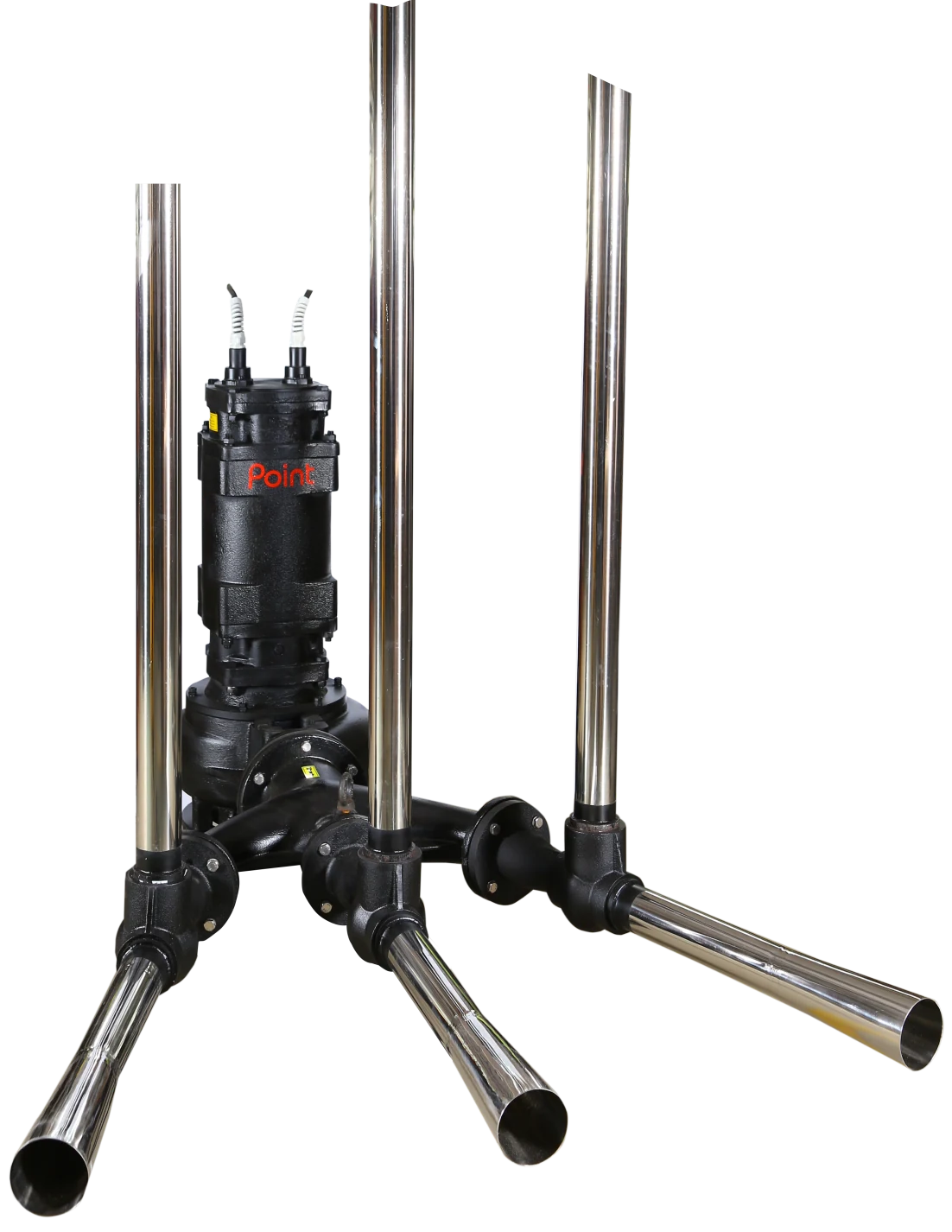
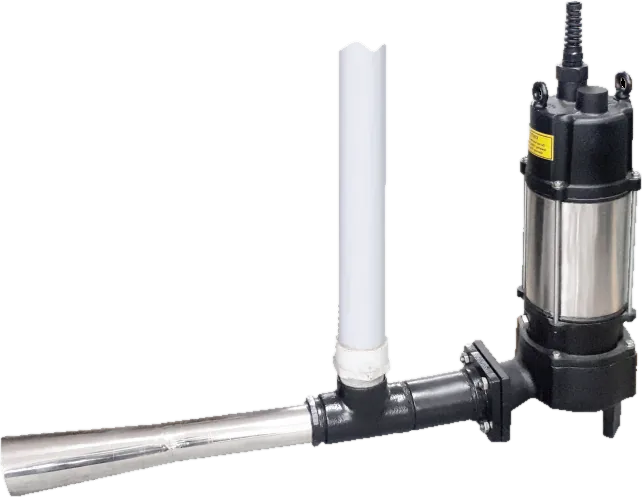
Draws atmospheric air into the water on the venturi-nozzle principle — no compressor and no complex mechanism — supplying the oxygen biological treatment depends on while keeping solids in suspension. Suited to small and medium sewage plants, at depths up to 6 metres.
- Motor power
- 1 – 20 HP (0.75 – 15 kW)
- Pipe size
- 50 – 150 mm
- Submergence
- 2 – 6 m
- Solids
- 5 – 15 mm
What it’s for
Oxygen and Mixing From One Unit
The activated sludge process depends on aeration: the microorganisms that treat wastewater need a steady supply of oxygen. A jet aerator provides it for the biological degradation of organic material and the oxidation of dissolved minerals, and the same flow keeps solids in suspension so the tank stays uniform.
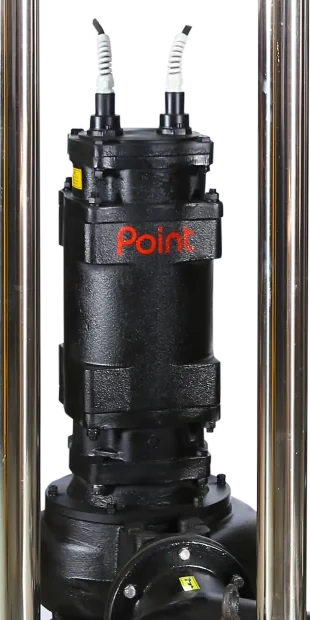
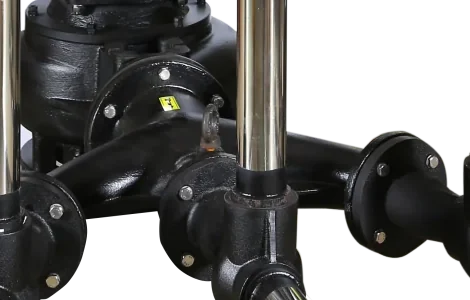
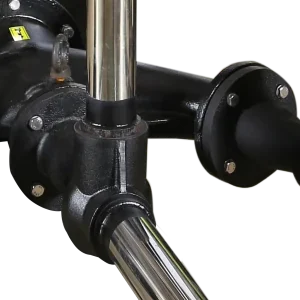
It works on the venturi-nozzle principle. A Point submersible pump drives liquid through the nozzle, and the flow draws atmospheric air down the intake pipe and into the water — no compressor, no complex mechanism and minimal moving parts. The result is consistent aeration with optimised energy use and low maintenance, for small and medium sewage plants at depths up to 6 metres.
Construction
How It’s Built
Specifications
Technical Data
- 50 PAJ-2-1.0
- 1.0 HP / 0.75 kW · 415 V 3 ph or 220 V 1 ph · 2880 rpm · 2 m max submergence · 5 mm solids · pump 50 PD-14-7-1.0
- 50 PAJ-3-2.0
- 2.0 HP / 1.5 kW · 415 V 3 ph or 220 V 1 ph · 2880 rpm · 3 m max submergence · 5 mm solids · pump 50 PD-16-12-2.0
- 50 PAJ-5-3.0
- 3.0 HP / 2.2 kW · 415 V 3 ph · 2880 rpm · 5 m max submergence · 5 mm solids · pump 50 PDS-24-15-3.0
- 80 PAJ-3-3.0
- 3.0 HP / 2.2 kW · 415 V 3 ph · 1440 rpm · 3 m max submergence · 8 mm solids · pump 80 PDS-40-8-3.0
- 80 PAJ-4-5.0
- 5.0 HP / 3.7 kW · 415 V 3 ph · 1440 rpm · 4 m max submergence · 8 mm solids · pump 80 PDS-80-10-5.0
- 80 PAJ-5-5.0
- 5.0 HP / 3.7 kW · 415 V 3 ph · 1440 rpm · 5 m max submergence · 8 mm solids · pump 80 PDS-60-13-5.0
- 100 PAJ-5-7.5
- 7.5 HP / 5.5 kW · 415 V 3 ph · 1440 rpm · 5 m max submergence · 10 mm solids · pump 100 PDS-65-15-7.5
- 100 PAJ-6-10.0
- 10.0 HP / 7.5 kW · 415 V 3 ph · 1440 rpm · 6 m max submergence · 10 mm solids · pump 100 PDS-100-14-10.0
- 150 PAJ-6-15.0
- 15.0 HP / 11.0 kW · 415 V 3 ph · 1440 rpm · 5 m max submergence · 12 mm solids · pump 150 PS-170-14-15
- 150 PAJ-6-20.0
- 20.0 HP / 15.0 kW · 415 V 3 ph · 1440 rpm · 6 m max submergence · 15 mm solids · pump 150 PS-200-13-20
50 mm & 80 mm models
100 mm & 150 mm models
- Principle
- Venturi nozzle — draws atmospheric air into the water
- Air supply
- Atmospheric, through the intake pipe — no compressor
- Drive
- Point submersible pump — PD, PDS or PS series, by model
- Mixing
- Keeps solids in suspension for uniform treatment
- 50 PAJ-2-1.0
- 19 → 9 m³/h air · 0.4 → 0.6 kg O₂/h · 0.5 → 3 m deep
- 50 PAJ-3-2.0
- 48 → 18 m³/h air · 0.9 → 1.4 kg O₂/h · 0.5 → 3.5 m deep
- 50 PAJ-5-3.0
- 74 → 37 m³/h air · 1.4 → 2.5 kg O₂/h · 0.5 → 4 m deep
- 80 PAJ-3-3.0
- 40 → 5 m³/h air · 0.8 → 1.4 kg O₂/h · 1 → 3 m deep
- 80 PAJ-4-5.0
- 60 → 15 m³/h air · 1.2 → 1.8 kg O₂/h · 1 → 3.5 m deep
- 80 PAJ-5-5.0
- 80 → 25 m³/h air · 1.5 → 2.5 kg O₂/h · 1 → 3.5 m deep
- 100 PAJ-5-7.5
- 140 → 50 m³/h air · 2.5 → 3.8 kg O₂/h · 1 → 4 m deep
- 100 PAJ-6-10.0
- 210 → 80 m³/h air · 3.8 → 5 kg O₂/h · 1 → 4 m deep
- 150 PAJ-6-15.0
- 300 → 170 m³/h air · 5 → 20 kg O₂/h · 1 → 5.5 m deep
- 150 PAJ-6-20.0
- 400 → 235 m³/h air · 8 → 27 kg O₂/h · 1 → 5.5 m deep
How it works
Air & oxygen by depth — approximate
Applications
Where It’s Specified
Adds oxygen while mixing the effluent, keeping wastewater characteristics uniform and preventing the tank turning septic.
Sequencing batch reactor (SBR) systems and aerobic digesters, where aeration drives the biological treatment itself.
Stormwater retention and storage tanks, and the cleaning of storm tanks — adding oxygen to held water helps prevent septic conditions.
Pond and lagoon aeration, and aeration in sewage and effluent treatment plants of small to medium size.
Common questions
Frequently Asked Questions
How does it draw in air without a blower?
On the venturi-nozzle principle: the pump drives liquid through a nozzle, and the fast-moving flow draws atmospheric air down the intake pipe and mixes it into the water. There is no compressor, and minimal moving parts to maintain.
Jet, radial or push flow aerator — which one?
Jet aerators use the venturi-nozzle principle and suit small-to-medium sewage plants up to 6 m deep. Radial aerators are self-aspirating and easy to install even in a flooded tank. Push flow aerators combine fine-bubble aeration with mixing and circulation, and are mostly used for ponds, lakes and landscape water rather than industrial tanks.
Which model do we need?
Each model is rated for a maximum submergence depth, from 2 to 6 m, and comes in a pipe size from 50 to 150 mm. Our engineering team sizes the aerator against your tank depth and flow or treatment capacity.
How are the aerators laid out in a tank?
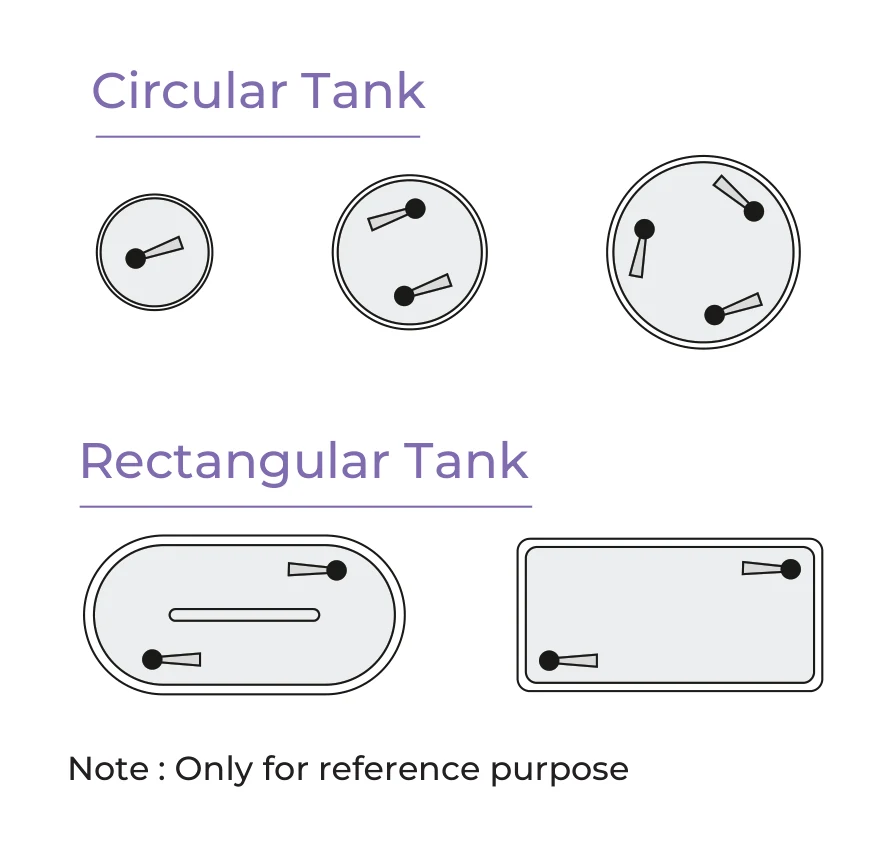
In a round tank, one to three aerators are set pointing round the wall so the whole tank turns. In a rectangular or racetrack-shaped tank, two are set at opposite ends or corners, pointing opposite ways, to drive a loop. That pattern is a starting point — we lay them out for each tank.