
Sewage · Chopper Pump
PCC Series
Chopper Pump
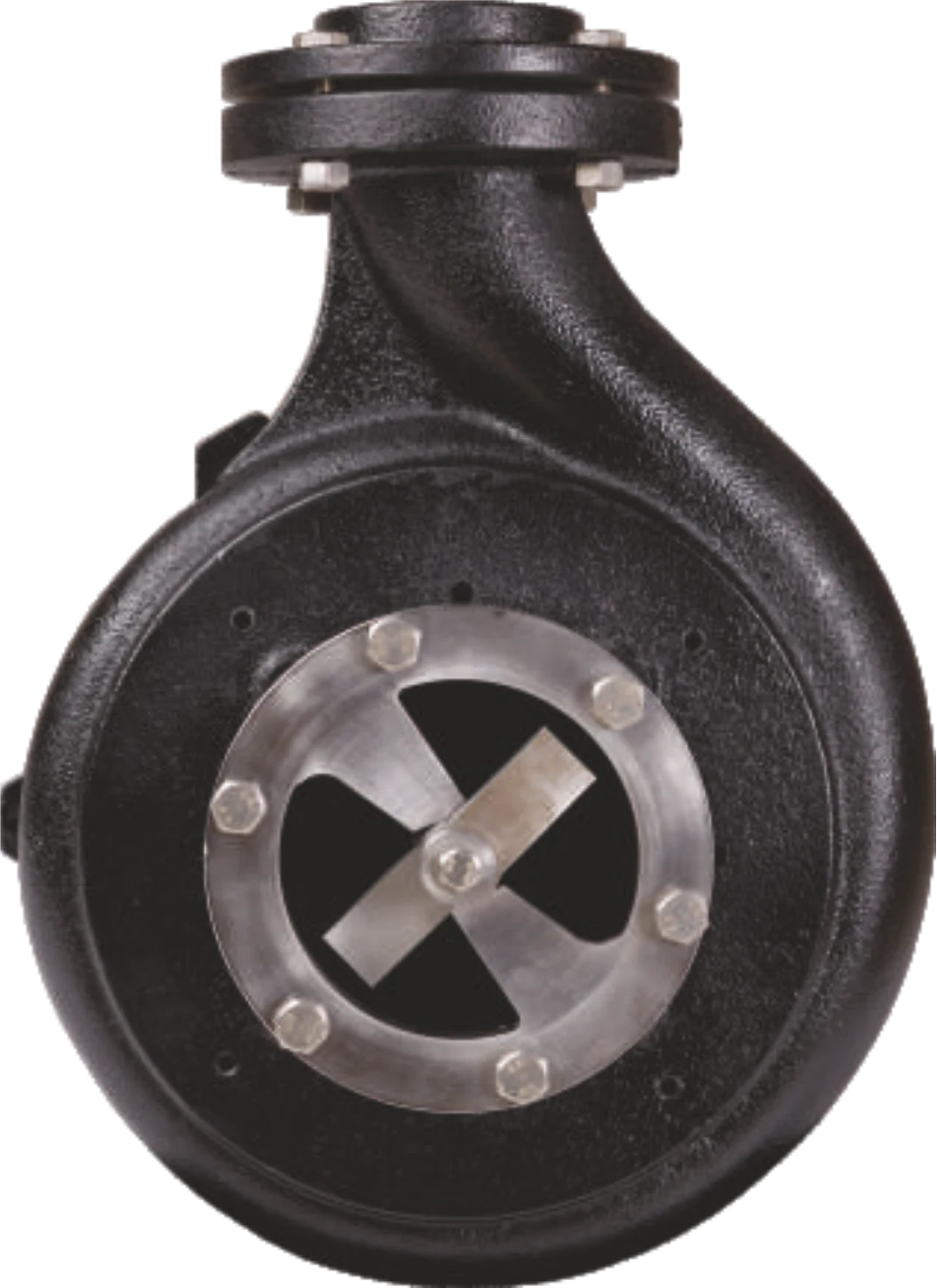
A chopper pump: a rotary cutter turns against a stationary cutter at the intake and chops oversized solids, stringy material and other hard materials before they reach the impeller — so nothing clogs the pump or the pipework after it. 4 to 50 HP, 65 to 300 mm, up to 1000 m³/hr.
- Flow
- 7 – 1000 m³/hr
- Max head
- 30 m
- Pipe size
- up to 300 mm
- Speed
- 960 / 1440 rpm
What it’s for
Chops as It Pumps
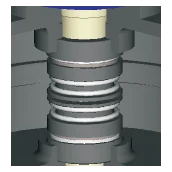
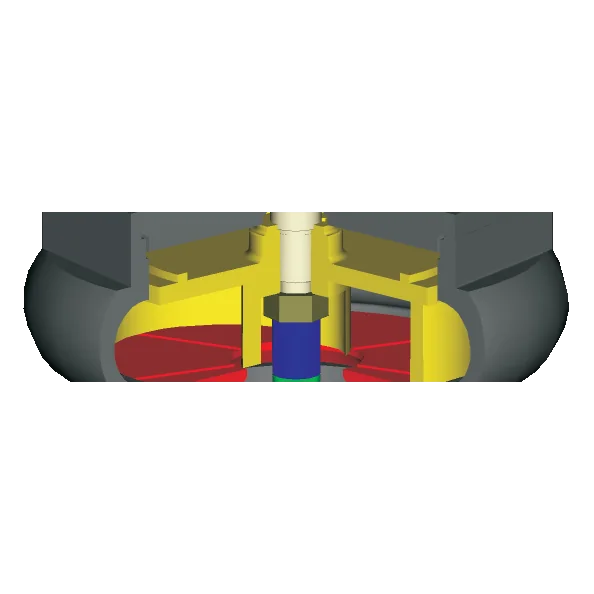
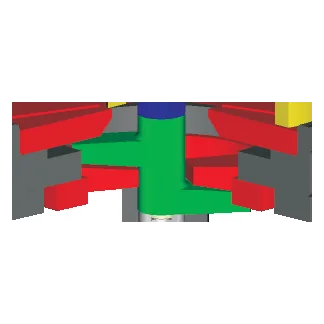
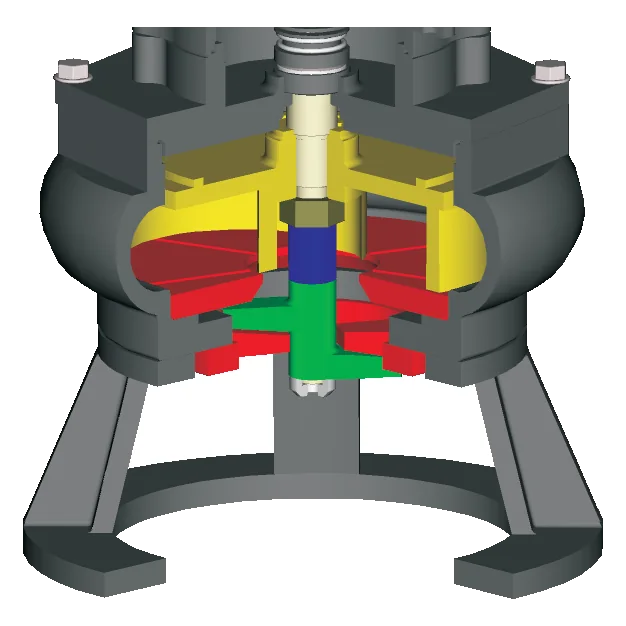
Oversized solids and stringy material are what block a sewage line — if not in the pump, then in the pipe after it. The PCC Series chops them on the way in: solids, fibre and other hard materials are drawn into the suction, and before they reach the impeller vanes they’re cut between a rotary and a stationary cutter, several hundred times a minute. What leaves the pump is small enough to pass through it and on down the line.
Thirty-five models from 4 to 50 HP cover 65 to 300 mm discharges, flows from 7 to 1000 m³/hr and heads up to 30 m — twenty at 1440 rpm and fifteen larger-flow models at 960 rpm. The cutters are high chromium steel, D2 or case-hardened En36 / OHNS steel. For thick, wet organic material such as biogas feedstock, the PCG chopper grinder adds a screw rotor; for smaller flows of fibrous effluent, the PC cutter pump.
Construction
How It’s Built
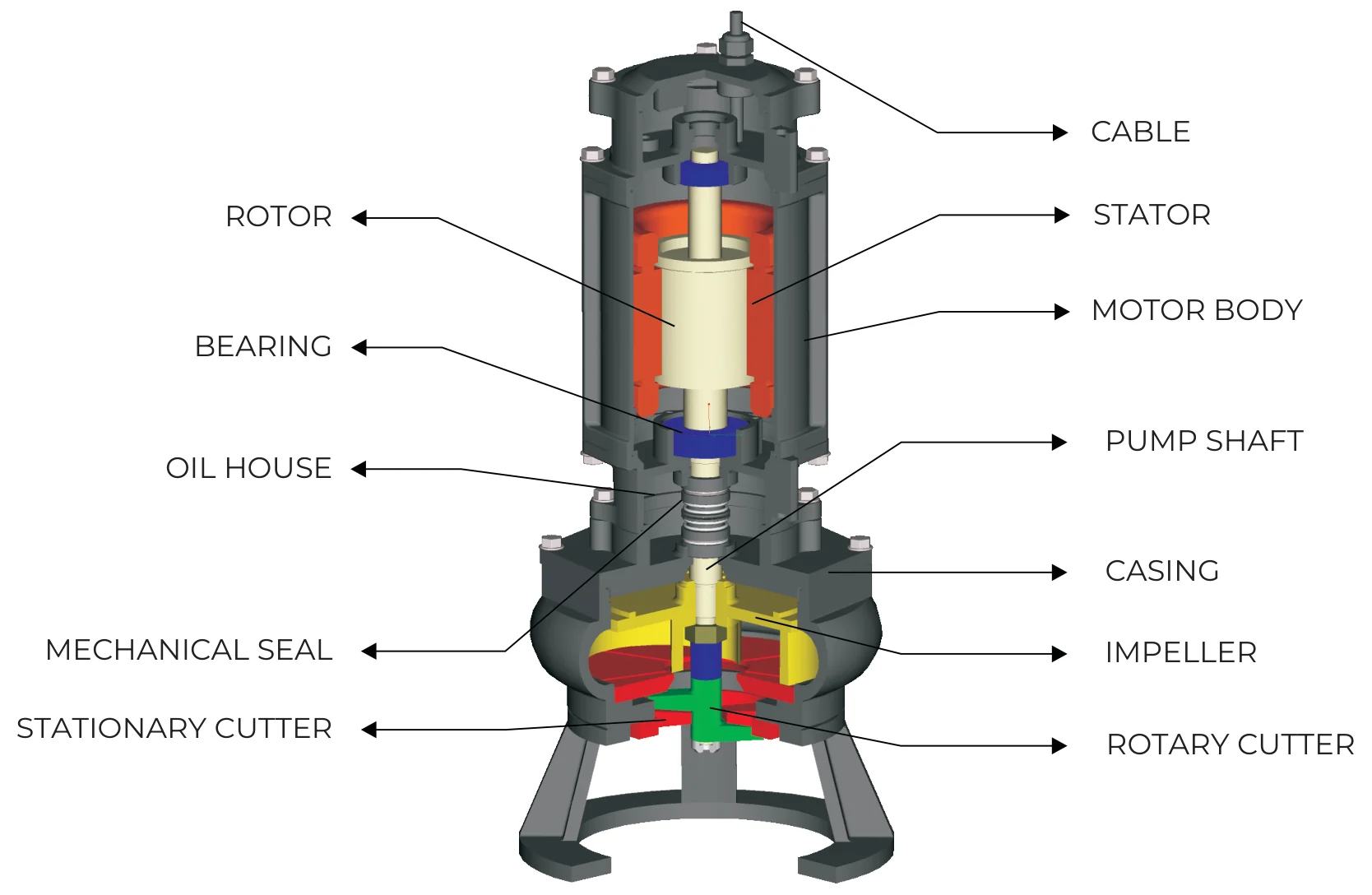
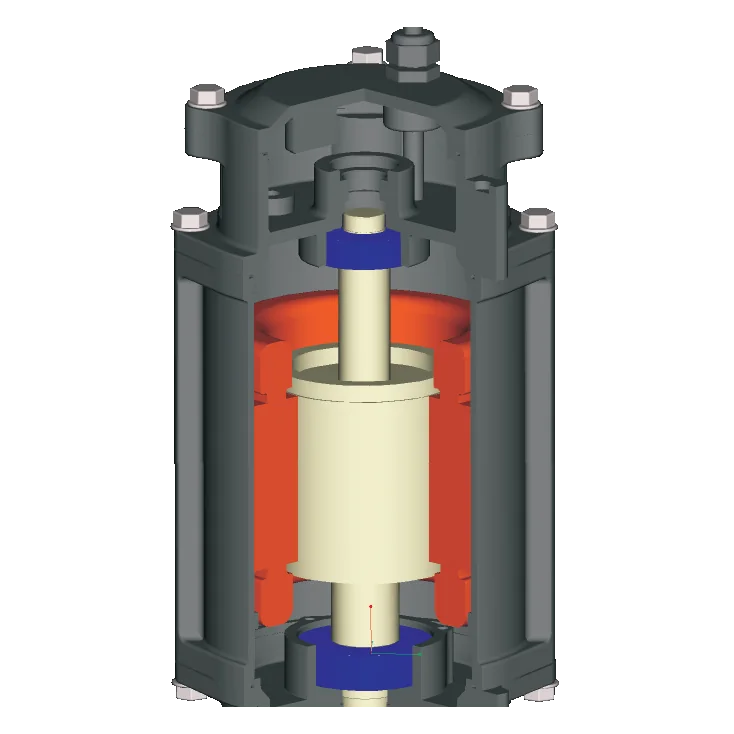
A three-phase submersible sewage pump with a chopping stage at the intake: a rotary cutter against a stationary cutter, below the impeller.
Specifications
Technical Data
- Flow
- 7 – 1000 m³/hr
- Maximum head
- 30 m
- Pipe size
- up to 300 mm
- Recommended particle size
- 40% of the discharge size
- Pumping medium
- Sewage, sludge and slurries with oversized solids, stringy, fibrous and other hard materials
- Supply
- 415 V
- Phase
- 3Ø, 50 Hz
- Speed
- 960 / 1440 rpm
- Protection
- IP68
- Insulation
- Class F
- Stationary cutter
- High chromium steel or D2
- Revolving cutter
- High chromium steel, or case-hardened En36 / OHNS steel
- Pump casing
- FG 200 / GG 20
- Impeller
- FG 200 / GG 20, steel castings
- Shaft
- SS431 / 1.4057 · SS420 / 1.4021
- Mechanical seal
- Carbon · ceramic · SIC · TC
Hydraulics
Rating
Cutting assembly
Construction
- 65PCC-42-9-4.0
- 4.0 HP / 3.0 kW · 1440 rpm · A 245 · B 163 · D 65 · H 600
- 80PCC-40-7-4.0
- 4.0 HP / 3.0 kW · 1440 rpm · A 279 · B 177 · D 80 · H 600
- 80PCC-50-10-5.0
- 5.0 HP / 3.7 kW · 1440 rpm · A 279 · B 177 · D 80 · H 690
- 100PCC-90-7-5.0
- 5.0 HP / 3.7 kW · 1440 rpm · A 250 · B 186 · D 100 · H 690
- 100PCC-100-9-7.5
- 7.5 HP / 5.5 kW · 1440 rpm · A 292 · B 194 · D 100 · H 770
- 100PCC-110-12-10
- 10 HP / 7.5 kW · 1440 rpm · A 292 · B 194 · D 100 · H 770
- 100PCC-110-15-12.5
- 12.5 HP / 9.3 kW · 1440 rpm · A 266 · B 175 · D 100 · H 920
- 150PCC-110-16-12.5
- 12.5 HP / 9.3 kW · 1440 rpm · A 286 · B 227 · D 150 · H 920
- 150PCC-130-16-15
- 15 HP / 11 kW · 1440 rpm · A 286 · B 227 · D 150 · H 920
- 150PCC-150-9-15
- 15 HP / 11 kW · 1440 rpm · A 286 · B 227 · D 150 · H 920
- 150PCC-220-7-15
- 15 HP / 11 kW · 1440 rpm · A 286 · B 227 · D 150 · H 920
- 200PCC-300-7-20
- 20 HP / 15 kW · 1440 rpm · A 340 · B 279 · D 200 · H 1230
- 200PCC-300-10-25
- 25 HP / 18.5 kW · 1440 rpm · A 340 · B 279 · D 200 · H 1290
- 200PCC-300-13-30
- 30 HP / 22 kW · 1440 rpm · A 340 · B 279 · D 200 · H 1290
- 200PCC-300-15-30
- 30 HP / 22 kW · 1440 rpm · A 340 · B 279 · D 200 · H 1290
- 250PCC-400-7-25
- 25 HP / 18.5 kW · 1440 rpm · A 370 · B 293 · D 250 · H 1310
- 250PCC-400-10-30
- 30 HP / 22 kW · 1440 rpm · A 370 · B 293 · D 250 · H 1310
- 250PCC-400-13-30
- 30 HP / 22 kW · 1440 rpm · A 370 · B 293 · D 250 · H 1310
- 300PCC-600-6-30
- 30 HP / 22 kW · 1440 rpm · A 370 · B 350 · D 300 · H 1330
- 300PCC-600-7-30
- 30 HP / 22 kW · 1440 rpm · A 370 · B 350 · D 300 · H 1330
- 100PCC-80-9-6.0
- 6.0 HP / 4.5 kW · 960 rpm · A 292 · B 194 · D 100 · H 770
- 100PCC-80-10-7.5
- 7.5 HP / 5.5 kW · 960 rpm · A 292 · B 194 · D 100 · H 770
- 100PCC-80-12-7.5
- 7.5 HP / 5.5 kW · 960 rpm · A 292 · B 194 · D 100 · H 770
- 150PCC-160-7-7.5
- 7.5 HP / 5.5 kW · 960 rpm · A 286 · B 227 · D 150 · H 795
- 150PCC-160-8-7.5
- 7.5 HP / 5.5 kW · 960 rpm · A 286 · B 227 · D 150 · H 795
- 150PCC-160-9-10
- 10 HP / 7.5 kW · 960 rpm · A 286 · B 227 · D 150 · H 795
- 150PCC-160-11-10
- 10 HP / 7.5 kW · 960 rpm · A 286 · B 227 · D 150 · H 795
- 150PCC-160-13-15
- 15 HP / 11 kW · 960 rpm · A 286 · B 227 · D 150 · H 920
- 150PCC-160-15-15
- 15 HP / 11 kW · 960 rpm · A 286 · B 227 · D 150 · H 920
- 200PCC-320-20-40
- 40 HP / 30 kW · 960 rpm · A 440 · B 343 · D 200 · H 1850
- 200PCC-300-25-50
- 50 HP / 37 kW · 960 rpm · A 440 · B 343 · D 200 · H 1850
- 250PCC-500-10-40
- 40 HP / 30 kW · 960 rpm · A 477 · B 362 · D 250 · H 1950
- 250PCC-500-14-50
- 50 HP / 37 kW · 960 rpm · A 477 · B 362 · D 250 · H 1950
- 300PCC-700-10-40
- 40 HP / 30 kW · 960 rpm · A 437 · B 411 · D 300 · H 1710
- 300PCC-700-12-50
- 50 HP / 37 kW · 960 rpm · A 437 · B 411 · D 300 · H 1710
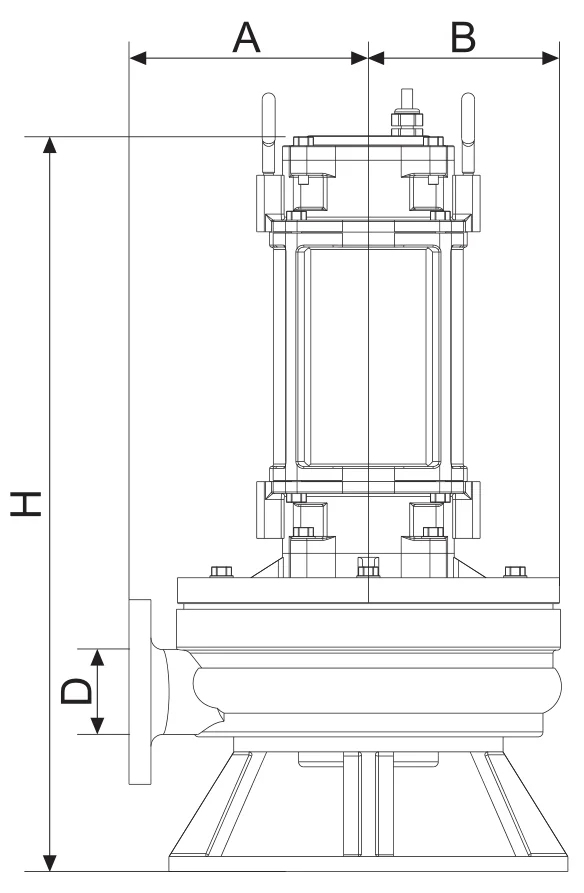
Models — motor · speed · dimensions in mm, letters as on the drawing
Applications
Where It’s Specified
Raw sewage into sewage and effluent treatment plants, where rags and oversized solids would otherwise clog the pumps and pipework downstream.
Moving sludge between the tanks and stages of a treatment plant, with its solids chopped small enough to pass the pipes and valves after the pump.
Municipal and industrial sumps that collect oversized solids, stringy material and other hard materials along with the sewage.
Manure slurries and other liquids carrying large or tough solids, from dairy, livestock and poultry farms. See industries we serve →
Compare
Chopper, Grinder or Cutter?
Point’s sewage pumps reduce solids in different ways. What decides between them is what the sewage carries, and the flow and head the job needs.
-
PCC SeriesYou’re here
Rotary and stationary cutters chop oversized solids and stringy material as it pumps — 7–1000 m³/hr to 30 m.
-
PCG Series — Chopper Grinder
Chopper cutter plus hardened screw rotor — oversized and stringy material at 7–1000 m³/hr to 30 m. The series for biogas feedstock.
-
PC Series — Cutter
Stationary and rotating cutters hardened to 55–60 HRC for fibrous and hard material, 2–300 m³/hr to 45 m.
-
PG Series — Grinder
A hardened stainless grinder shears solids into small particles — sewage, sludge and effluent with solid or fibrous material, 2–300 m³/hr to 45 m.
-
High Discharge — Submersible Sewage
Sewage and effluent at large-scale flow — up to 3000 m³/hr and 40 m, 20–100 HP, solids up to 100 mm.
Common questions
Frequently Asked Questions
How does the chopper work?
Two cutters: a rotary cutter on the pump shaft and a stationary cutter at the suction. Solids, fibre and other hard materials drawn into the pump are cut between them before they reach the impeller vanes — several hundred times a minute — so they pass through the pump and keep moving downstream instead of clogging it.
PCC or PCG — which do we need?
Both cover 7–1000 m³/hr and heads to 30 m. The PCC chops oversized solids and stringy material in sewage and sludge. The PCG Series adds a hardened screw rotor and a second cutter for thick-mass wet organic material, such as biogas feedstock.
How do I read a PCC model name?
Left to right: the discharge size in mm, the series, then the duty point — flow in m³/hr and head in metres — and the motor in HP. 200PCC-300-13-30 is a 200 mm pump delivering about 300 m³/hr at 13 m head on a 30 HP motor. The speed is listed against each model in the technical data.
Is there a single-phase version?
No — the PCC Series is built for 415 V three-phase, 50 Hz supplies, from 4 HP up. For smaller single-phase duties, look at the PC or PG Series.
How do we service it without entering the sump?
Install it on an auto-coupling system. The pump lifts out on guide rails with no flange bolting and no sump entry, and its own weight reseals the connection on the way back down.